
Florida’s no-fault law causes some confusion, especially with people from other states. There are only 12 states in the US that have no-fault laws.
Here are some of the basics to help explain the law and what it means if you are involved in an accident.
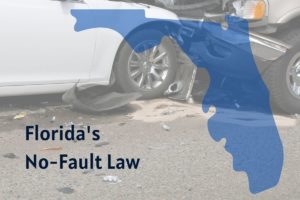 A no-fault state requires drivers to have a certain type of car insurance that pays no matter who was at fault in an accident. In Florida, anyone with a car must take out a minimum of $10,000 in personal injury protection insurance coverage (PIP). This means that your own insurance will pay for your medical bills (80% of each bill) or lost wages (60% of wages), up to $10,000 total, no matter who was at-fault. Now, that doesn’t mean someone wasn’t at-fault, because someone was likely at fault, but as it pertains to that first $10,000 in medical bills and lost wages, it doesn’t matter who ran the red light.
This insurance reduces an injured person’s ability to sue and limits responsibility and mitigation against dangerous driving. PIP does not cover non-economic damages, such as pain or suffering, future medical bills, or replacement household services. That is why you MUST purchase sufficient Uninsured Motorist insurance to protect you and your family!
How does Florida’s no-fault law compare to other states?
In Florida, this is the mandatory insurance policy and is strictly enforced. This is not the case in all states, apart from the 11 other no-fault states, which include Hawaii, Michigan, New York, and Pennsylvania. In the rest of the US, it’s a choice that the driver makes — they can either go with a liability insurance-based policy or no-fault insurance.
Can you still file a personal injury lawsuit?
Yes, you can still file a personal injury lawsuit even in Florida. If you’re left with a permanent injury, disability, or scarring, or the accident results in death, you can file a personal injury lawsuit. There is a four-year window to file a lawsuit on your injury claims and two-year limit to file a wrongful death claim.
A personal injury attorney will help you know your rights if you have been injured in an auto accident. In Fort Myers, contact Kagan Law Firm to schedule a free consultation.